Grappling With Insecurities

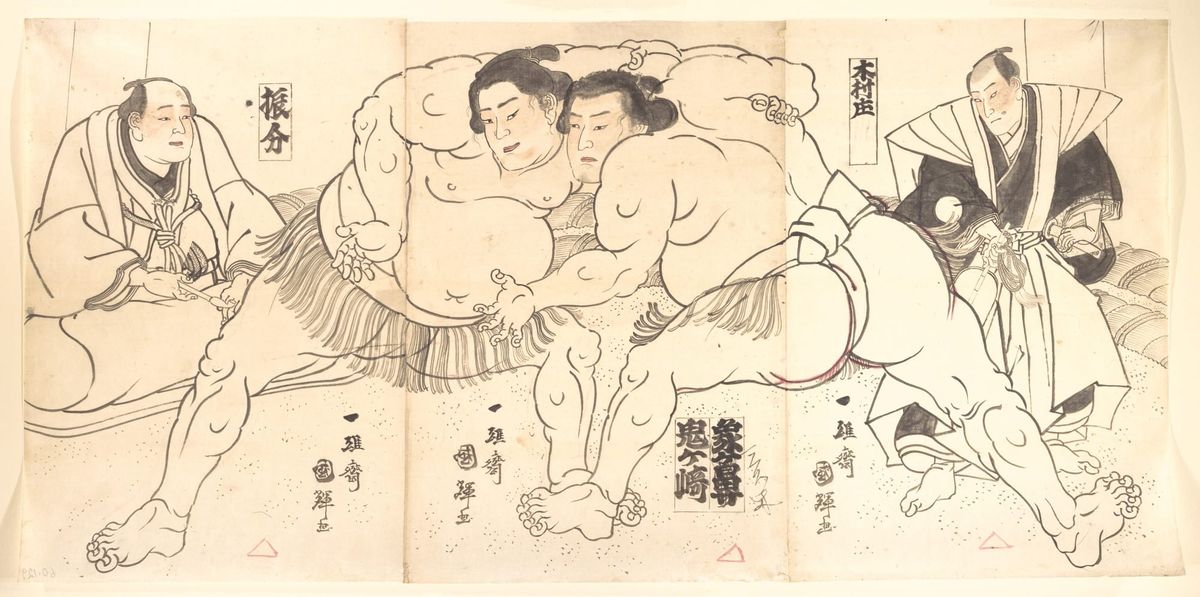
You can go four weeks without food, two days without water, and one minute without air – and I haven't taken a breath for fifty seconds.
My eyes are wide open, darting around. It's one of the worst situations I've ever been in, and my brain's frantically trying to find a way out.
No chance.
I'm breathing more heavily than ever. Exhaustion is getting to me.
If only it were that.
I'm about to reach my limit. My body starts to quit – the consequence of having almost no oxygen left in it.
Just when I think it's over, my body makes its last stand: adrenaline floods every cell of my body, trying to save it. I summon all the strength I have left for one final attempt to escape.
It fails.
Even though all the stress hormones are shooting through my system, it gets quiet around me. No oxygen left. Darkness caves in all around me.
Just before the lights go out completely, I do it: I tap my training partner on the shoulder. He stops strangling me. Blood and oxygen rush back to my brain. After about five seconds, I feel halfway alive again.
It's the year 2024, and I'm two weeks into my journey with the martial art known as "Brazilian Jiu-Jitsu".
A fascination with fighting has existed ever since I was a child. I'd lie to you if I said it had anything to do with fitness in the beginning – it was because I saw Son Goku go Super Saiyan against Frieza for the first time.
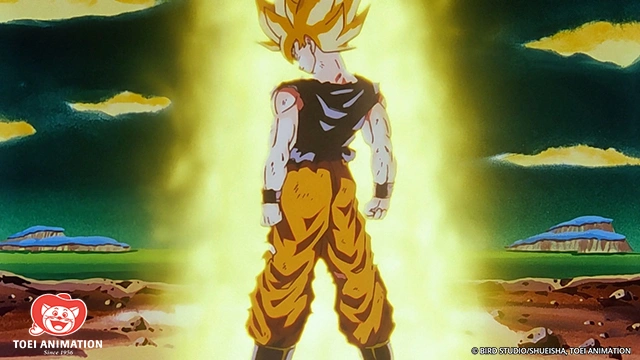
My adult self's desire to start martial arts didn't come from seeing my childhood hero in an aura of pure gold and power. As an adult, I started training in martial arts because of insecurities.
Most people (especially men) live their whole lives in one particular delusion: thinking they can fight.
Because of some things that happened in my past, I was accustomed to there being tension in the room. At least it seemed so from the outside.
On the inside, my mind was in disarray. Whenever I was in a situation involving physical danger, I got tense and my mind got loud – so loud I couldn't make the right decisions anymore. I knew something had to change. I wanted to be able to defend myself and others.
When I started Brazilian Jiu-Jitsu, I wouldn't have thought that a hobby you do twice a week could not only eliminate some insecurities but also teach you so much about life. More specifically, it taught me how life actually works, not how they tell you in school that life should work.
It might sound harsh, but what you get out of life seems to come from three pillars: courage, grit, and competence.
Walking into a martial arts gym can be scary. You usually don't know the people there, it's sweaty and loud, and everybody in there tries to choke each other. Weird.
Because I played American football for about ten years and worked out a lot, I thought the first training session wouldn't be as bad for me.
How wrong I was.
There was this guy (he still trains at the gym) who was lighter than me, shorter than me – and did whatever he wanted to me. It's not an exaggeration when I say I couldn't do anything. He choked me, armlocked me, and hip-tossed me. It felt like I was a child going against a grown man.
But the worst part wasn't even the submissions. What really stuck with me was how effortlessly he kept me on the ground. I'd lie if I said I didn't try to get out with all my strength (which you shouldn't do – technique is the king and queen of the art). I really couldn't do anything.
That's not a sexy sales pitch. Want to sign up for a grueling sport where you're getting smashed over and over again, all while paying for it? You realize your insufficiencies when it comes to defending yourself. So, to go back and face these insufficiencies on a regular basis takes something very special and rare: courage.
It also sparked my interest: even though I was mauled for one hour straight, I walked out of the gym amazed. How do these techniques work? Why couldn't I get these guys off me?
Here comes the first filter of Brazilian Jiu-Jitsu: the ego filter.
Some people don't feel this way. For some, this experience doesn't inspire amazement but humiliation. They walk out of their first Jiu-Jitsu lesson, trying to make sense of it. Then, their brain comes up with a toxic conclusion: it must've been a fluke.
"This would never work in a real fight!"
"If I had just started punching, they wouldn't have had a chance!"
There's some truth to the second one (which is why I also started training Muay Thai), but the rest comes from a place of insecurity. When your identity as a "tough guy" gets crushed, it can be hard to bear this feeling. Some get smothered by the mental pressure – because of ego.
In Brazilian Jiu-Jitsu, you will get dominated time and time again. There are practices when you feel like everything's clicking, only to face the hammer in the next one. If you can quiet the voice of the ego in your head, it teaches you humility. But most of all, it teaches you grit: pushing on after an evening when nothing's worked isn't easy. Everything's screaming at you not to go back, but you do it anyway. This builds resilience like nothing else.
But why do I only tell you about this now? Well, because this week I got my blue belt:
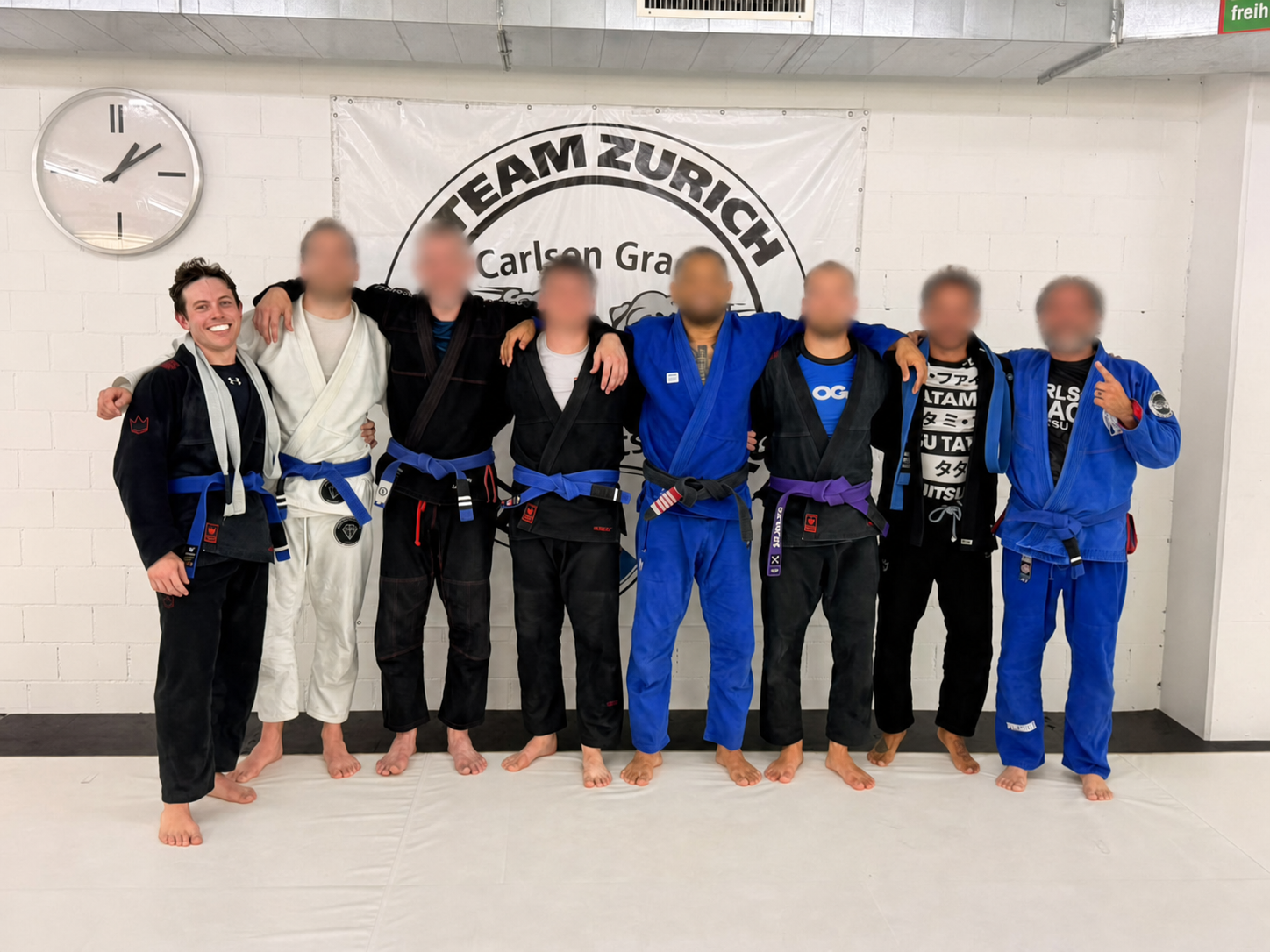
The belt color system in BJJ is a little different from that of most other martial arts. The belt color grading system is:
- White
- Blue
- Purple
- Brown
- Black
In most martial arts, the belt progression system is tied to the time invested. If you practice for half a year, you get your yellow belt. After another eight months, you get the next color, and so on.
It's different in Brazilian Jiu-Jitsu. The belts are not tied to time at all. Even though there might be estimates of how long it would take a person to reach a certain-colored belt, time isn't a factor. From what I can tell, a promotion is based on the three pillars mentioned before:
- The courage to show up again and again, going against people who are much better than you at the art.
- The grit to persist even through intense practices and sparring rounds, even when you don't feel like it.
- The competence demonstrated by your behavior, not just your skill. How dedicated are you to the art? Are you a good training partner? Do you help others? How good are your skills?
Having a blue belt basically means "you're learning things, congratulations."
Also, a different-colored belt around your waist doesn't magically make your Jiu-Jitsu better. I don't know how to apply submissions or defend against guard passes any better than before. Why? Because a piece of cloth doesn't increase your competence – only effort and skill do.
Which brings me to the last thing BJJ taught me. This lesson came at a time in my life when I needed it the most: it's not about the goal but the process.
For the longest time, I really wanted a belt promotion. But it wasn't about the art; it was just about getting to say, "I have a blue belt" (ah, the white-belt dreams!). This made practice less fun and – even worse – less effective. It wasn't about learning anymore but just showing that I learned. It turned from a practice into a performance.
This all changed when I committed to becoming a better grappler, not to getting a certain color of belt.
I don't know why, or if this is a little woo-woo, but as soon as I made that commitment, I also reached the goal I had previously wanted so vehemently much faster.
The insecurities are still here. But you can overcome them with what Brazilian Jiu-Jitsu taught me: courage, grit, and competence.