How Studio Ghibli Helped A Child Of Divorce

I was only a kid when I almost drowned in a vortex of confusion.
There's never a great time for parents to divorce. But as the American scientist Erica Komisar found out, there are worse times. The worst by far is when the child is between eleven and thirteen years old.
When my parents divorced, I was twelve.
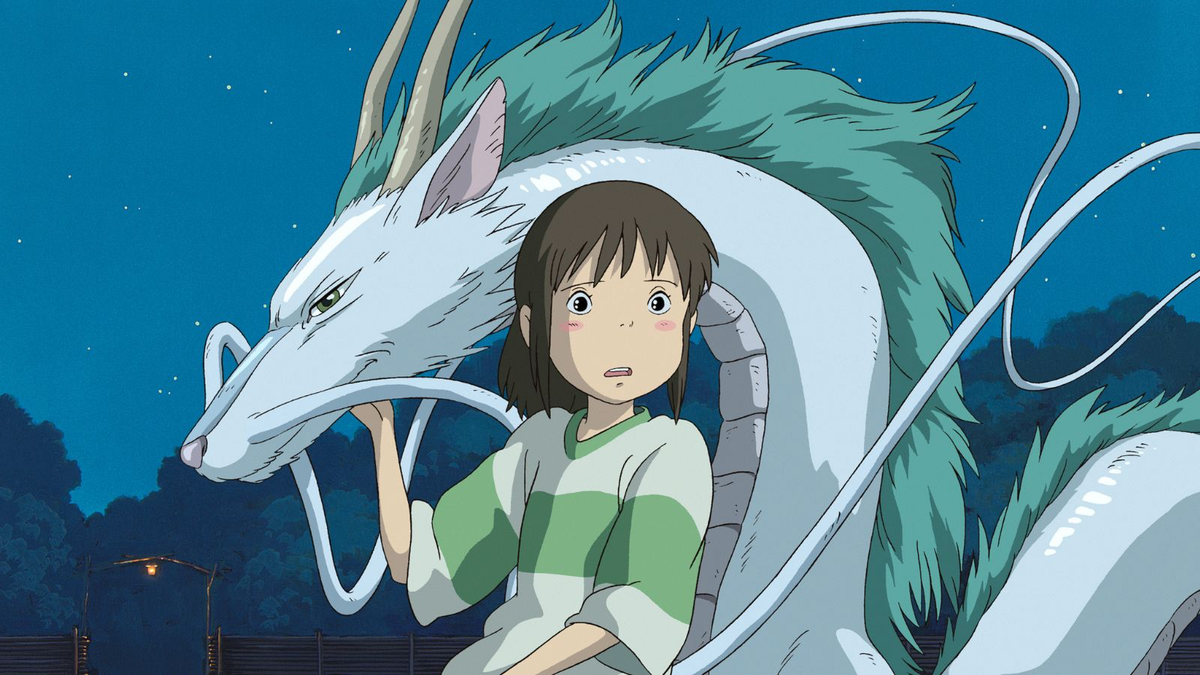
Most people think in times like these the prevalent feeling is sadness. It's not. The most apparent feeling for a child in between the trenches of divorce is just straight up confusion. You desperately want to see through the fog of war, and your most reliable source of information (or so you think at least) are grown-ups. To my dismay, I never found the explanations of adults helpful. If they didn't dodge the question, out came this half-hearted blob of word-soup I didn't know how to slurp up. I was completely lost, sad, angry, and most of all confused. For twelve-year-old me, all hope seemed lost. Until one of my favorite movies from my childhood came to the rescue: "Sen to Chihiro no Kamikakushi", better known as "Spirited Away".
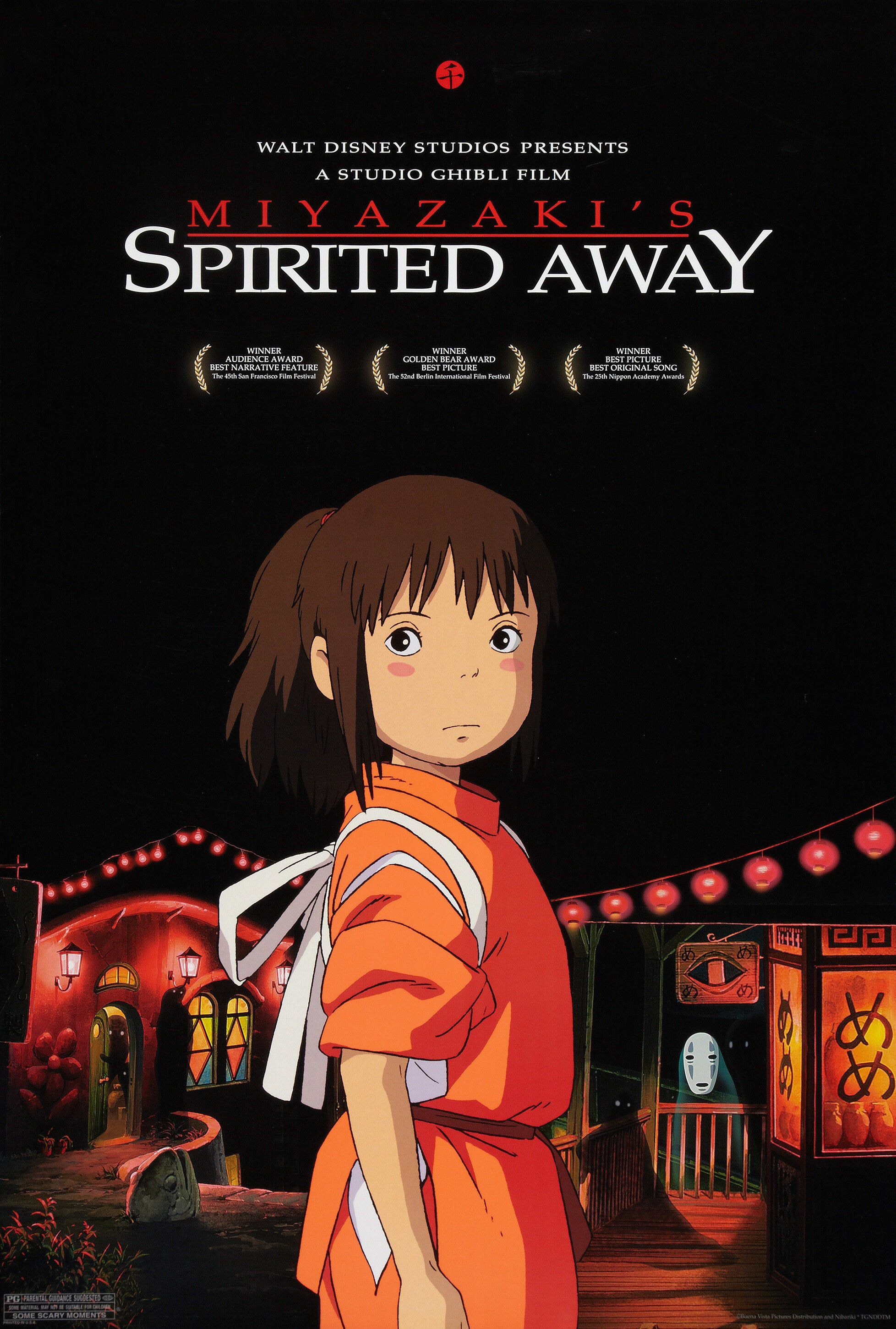
Beautiful story very short, Chihiro's life is in flux: her parents are moving again because her father got a job somewhere else in the country. To the dismay of Chihiro, she's going to leave all her friends behind. Change in the life of a child seems much more visceral than in the life of an adult because life experience hadn't had the chance to come by. During their drive to their new home, they stop at an abandoned bath house. To their surprise, the food stalls are stacked, but nobody's there. Chihiro's parents start munching away while she explores the area. What Chihiro discovers when she gets back is of pure horror: her parents have turned to pigs. One thing leads to another, and Chihiro is thrown into a nightmare.
In an instant, Chihiro lost her home and her parents.
That's exactly how I felt when my parents divorced. Granted, my parents didn't turn into pigs nor did I start working at a Japanese bath house. But I felt alone, imprisoned in a nightmare I hadn't dreamt up, with no chance of escaping – or so it seemed. Even in nightmares, there are forces who help you.
Back then, the worlds and stories of Studio Ghibli weren't just some of my favorite movies, but a door to somewhere else. They became a door to a gentler world than the one I found myself in during this time.
Escapism? Maybe, but these movies are much more. To me, they were also a teacher.
What I love about Ghibli films compared to western animation movies such as the likes of Disney (which I also love with all my heart) is their ambiguity of the villain. In Disney movies, it's clear who the villain of the story is. I mean, have you ever seen the beginning of Hercules? Take a guess who the villain is:
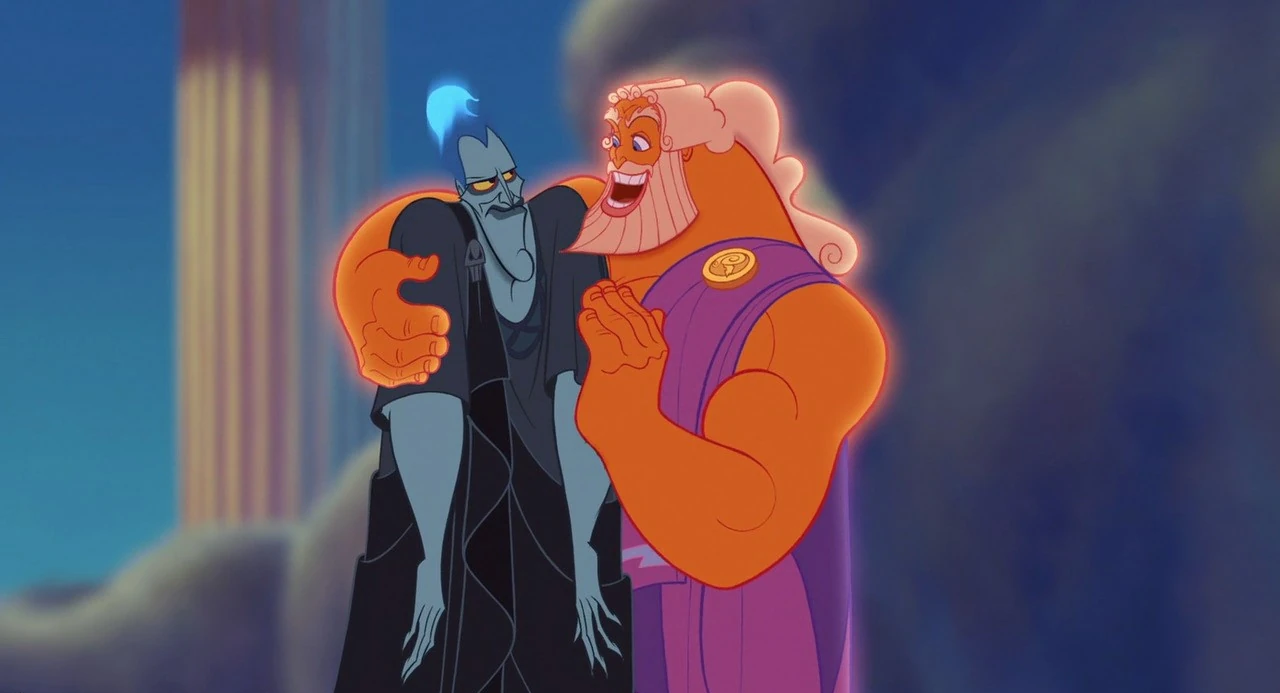
Yes. Of course it's Hades.
It's clear he's up to no good. This makes understanding these movies easy, which has its benefits. Yet it also comes with some pitfalls, and the most dangerous one comes from this simplicity.
In the first ten minutes of the movie, it's established who the heroes and the villains are. But it's never explained why Hades turns evil. There's one scene where all the gods laugh at him, making us think he's the bad guy because of his pettiness.
This phenomenal video of MilkyyMelodies shows us why Hades ended up on his path:
This simple view of people is not an accurate representation of life. People are not inherently good or bad, but something in between.
In my opinion, Ghibli is much more accurate at depicting reality.
Let's take Yubaba, the owner of the bath house where Chihiro works:
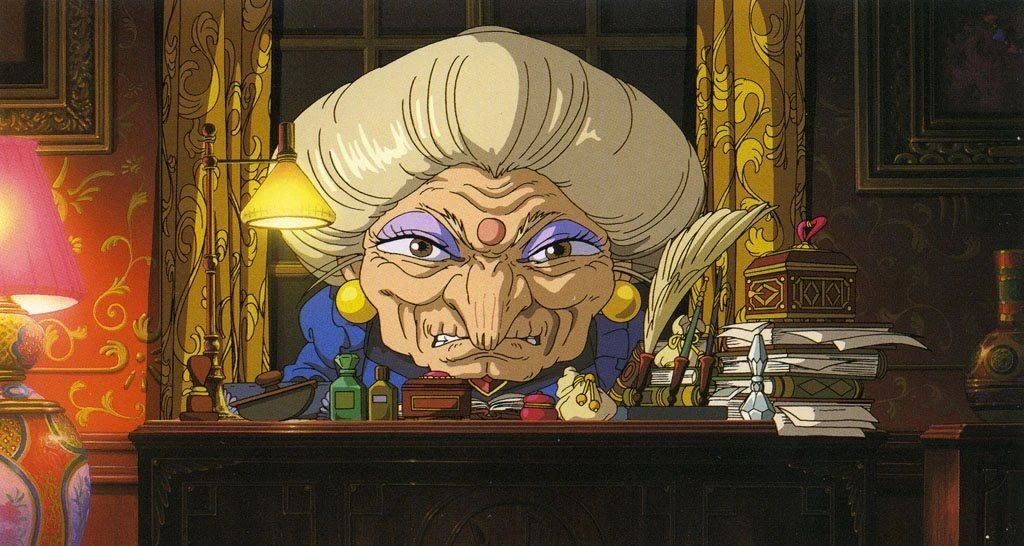
Yes, she clearly looks like a villain. She's even a witch! But during the movie you get to know her. Even though you're on Chihiro's side, you can't argue with her reasoning why she does certain things you'd consider "evil". She rules the bath house with an iron fist, gathering all the silver and gold she can. This might look ruthless from the outside, but that's also her job: like any CEO, she needs to make sure the bath house's finances keep flowing. Turning a hot bath into a cold profit may not spark sympathy for her, until you see the scene with her child: like any mother, she wants to protect her son at all costs. Her intense maternal love redeems her to some degree, maybe even makes her likable. Again, she might not be the most gallant of ladies, but she's not evil per se – there are reasons why she acts that way. The lens you're seeing her through is obscured by your sympathy for Chihiro.
And so it is with the love for your parents. Especially as a child, your view is tainted by your wish for them staying together. Paradoxically, this makes you see only black and white, thinking your parents are either good or bad. But this is not how life actually is. This is not how relationships between people are. Relationships and people are this grayish blend of murkiness. But this in-between messiness is exactly where their beauty is found. When you look close enough, you will see that this grayish goo is actually full of vibrant colors. Some pleasant, some icky, some in between.
Miyazaki's tale showed me reality. It made me realize that neither of my parents was the villain. They're both imperfect human beings navigating life. I just happened to be part of one of the more unpleasant parts. Chihiro's adventure lifted my confusion, helped me face my emotions, and led me on the path to acceptance. A fictional world healed the reality of my twelve-year-old self. I was pulled to the surface, out of the vortex of confusion. It made me believe in a better tomorrow – how right this belief was.